Heaven, Hell, And Minnesota: Emily Bjorke On Her Debut Album

By : Josh Kitchen / October 21, 2026

I first met Emily Bjorke through our mutual love of The Beach Boys. When I was looking for a guest to join us on an episode of Pod Only Knows: A Beach Boys Podcast, I came across a musician who described herself in her bio as a "walking Brian Wilson encyclopedia." Naturally, I had to reach out. As it turns out, Emily wasn't exaggerating, telling me she ownsabout five vinyl copies of the Surfer Girl album, which we dove deep into together on the podcast.
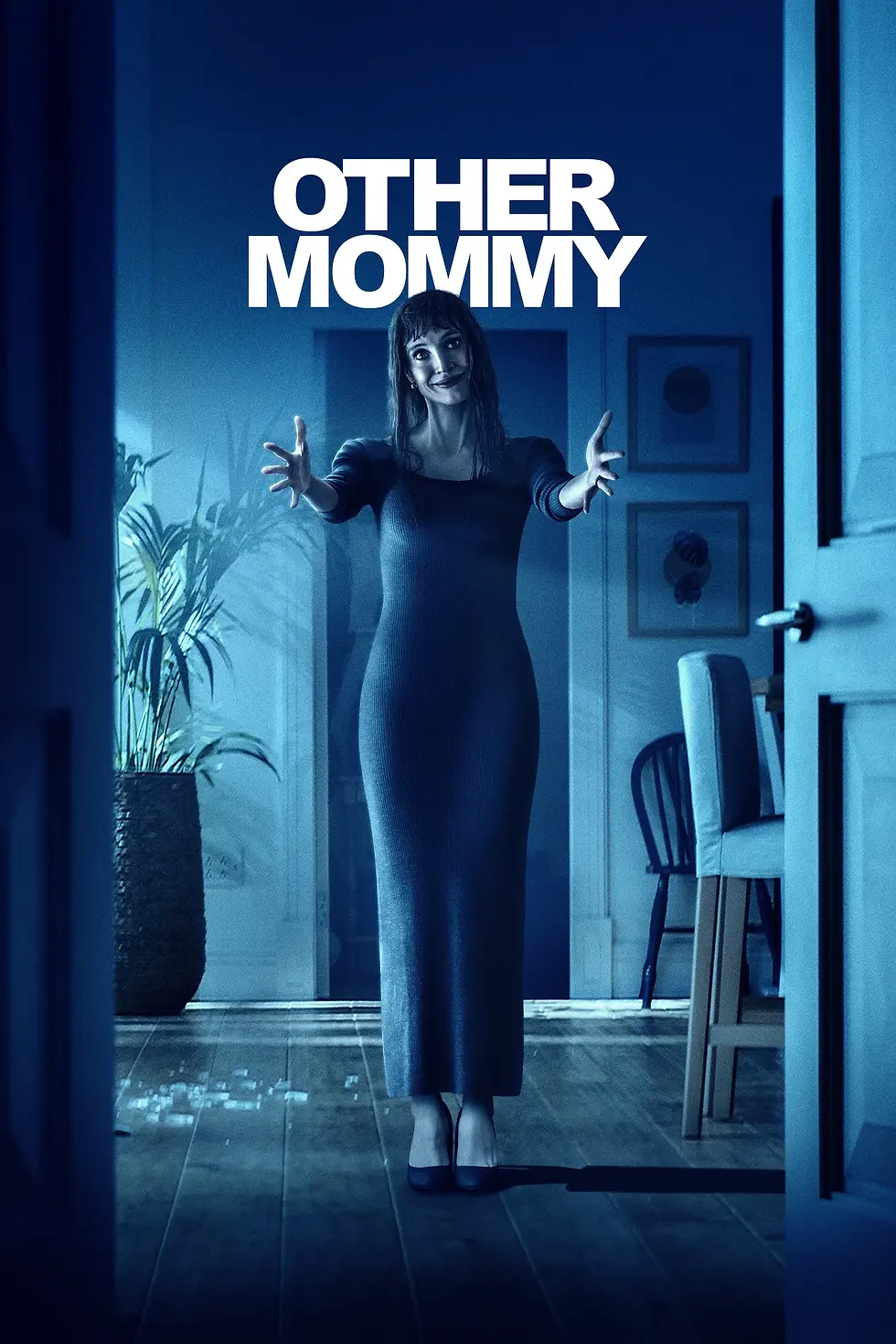
Born far from the ocean, Bjorke grew up in Minnesota surrounded by music. As a teenager, she found her way into the Minneapolis music scene, where she formed Last Import, an all-girl surf rock band, before eventually making the move to Los Angeles. These days, she's made a career out of writing music for just about everything. From composing the WNBA theme for CBS Sports and a Major League Soccer theme for ESPN to scoring projects for film and television, including a contribution to the new Jessica Chastain horror film Other Mommy, Bjorke has built an impressive résumé doing what she loves.
But somewhere along the way, making music for a living meant having less and less time, energy, and enthusiasm to enjoy it for herself. After years of writing to briefs, composing for clients, and fronting bands full of differing opinions, Bjorke began asking herself a deceptively simple question: What would her music sound like if she were making it entirely for herself?
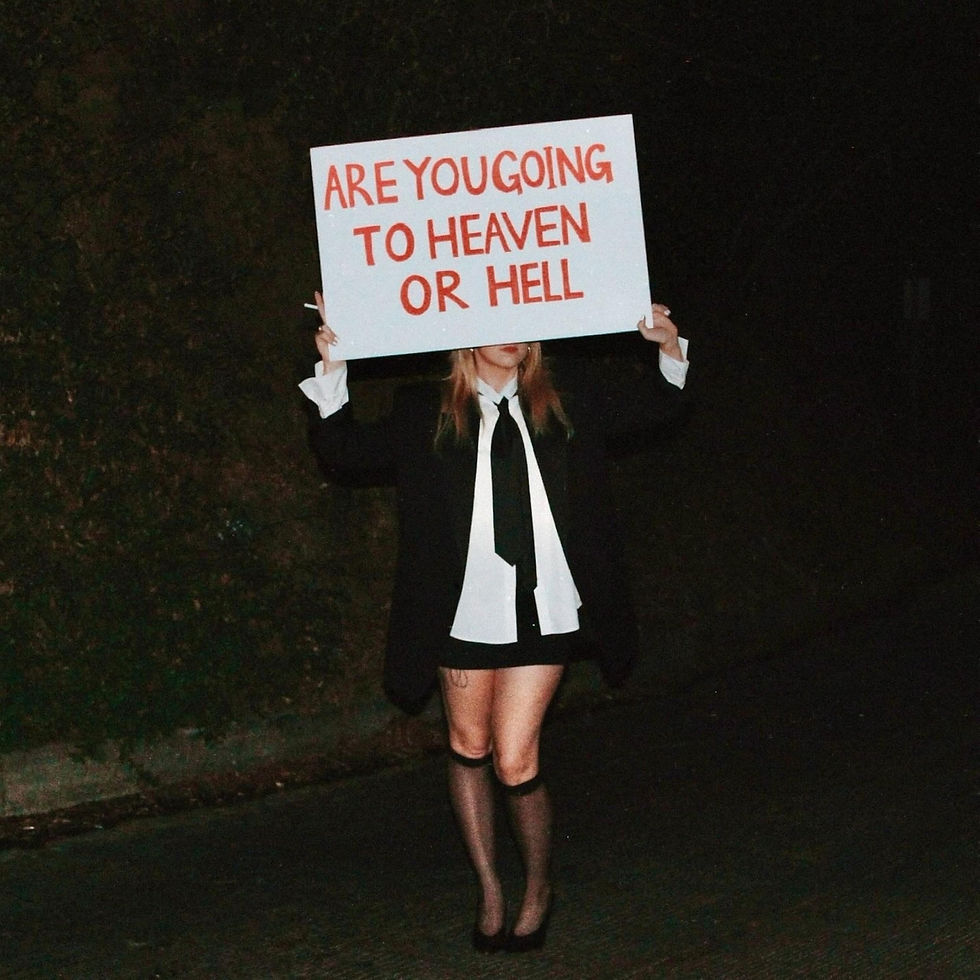
The answer is Are You Going to Heaven or Hell?, her debut solo album, a sprawling, genre-hopping collection of songs that pulls from country, indie rock, power pop, and just about everything in between. Written, produced, and largely performed by Bjorke herself, the record is the culmination of more than 70 songs, years of musical experience, and a newfound freedom to create without worrying about what anyone else might think. She even hand crafted much of the album art including the track listing on the reverse cover as well as hand drawing effects in the "Toonie" music video.
Ahead of the album's release and her homecoming show in Minneapolis at the legendary 7th Street Entry, I caught up with Emily to talk about growing up in Minnesota, her earliest musical ambitions, making a living as a composer, and what it means to finally make a record that is completely, unapologetically her own.
Josh Kitchen:
Emily, your debut record, Are You Going to Heaven or Hell?, just came out. That's got to feel pretty crazy.
Emily Bjorke:
I can't believe it's finally here. It's been a long time coming.
How long? Give me an exact time.
Bjorke:
There were probably 70-something songs written for the album.
Seventy songs?

Bjorke:
Well, Josh, I'm a fucking crazy person. All produced and played and written by myself. Some weren't fully done, but the first one ever written for it was “Little Time.” Of all the songs, it felt right to release the first thing that kicked off the process as the first single. That was in March of 2025.
That's a lot of music to write in a relatively short time. When you sat down to write for yourself again, did you expect a song like “Little Time” to come out?
Bjorke:
I kind of want to say yes. I interpret “Little Time” as something that's bordering country. There are still surfy guitars, still a Beach Boys vibe in the harmonies, but there's also the country aspect and my love for Kacey Musgraves, or Mapache, if you know them.
Love Mapache.
Bjorke:
Love Mapache. Those more acid-country vibes are something I'd never written before, and it felt like the next thing to do. I'm not surprised that's where we landed. I hadn't put out music since 2019 with my band Last Import. I remember sitting exactly where we are right now, with my monitors and studio space, thinking, “If I wrote music right now, what would I do?” And then I wrote the whole song in one sitting.
There's so much on this record that defies genre. Some songs remind me of boygenius or Phoebe Bridgers, some have that early-2000s rock sound, and “Astronauts” almost borders on R&B pop. Was it freeing not to be confined to one sound?
Bjorke:
Oh yeah. I think I would've been overwhelmed if I'd gone into it saying, “I'm gonna write now, and it's gonna be multigenre.” What I ended up finding was that it became a sandbox. Structurally, I love a good hook. I love harmonies. Melody is everything to me, and that defies genre. Because of that, I could find new ways of doing things that I hadn't been able to access in anything I'd made before.
I had a buddy playing pedal steel on it. I could hear what I wanted in my head and ask, “Will you do this?” There were people from everywhere. I would've had no idea at the start that this was what it was going to take. The collaboration made the whole record bloom for me.

You mentioned “World's Longest Tightrope,” which has pedal steel and fiddle. What happened when those players came in?
Bjorke:
I'd had that song sitting there, tweaking it for roughly six months. I remember working on it on a plane from Toronto to L.A., in a studio in Minneapolis, everywhere. When I got the stems from the live fiddle player and pedal steel player and put them in, I didn't want to hear that song anymore. But within 20 seconds, I had to pause because I started crying.
They weren't bringing in something that wasn't you. They were helping complete an idea you already had.
Bjorke:
Yeah, and it's almost spiritual in a lot of ways. There's a lot of trying on this album. I'm playing cello on five of the songs, mainly texturally. I was learning cello for a score I was working on, and I thought, “You know what? Let's just fucking lock this thing in.” But when I hear somebody play what they're good at, just a human being doing what they're good at, it's like defogging a mirror. It's like sticking the landing.

You make music professionally, too. When we recorded the podcast, you mentioned that listening to music for work all day can make it hard to listen for pleasure. Has making your own album changed that relationship?
Bjorke:
Totally. It did kind of suck to realize that. When it was just the work world of making music, I still had a little escapism. But when it's work and I'm also building this universe of what my life sounds like, it was hard to connect to things externally when I was finally connecting to things internally.
So many friendships are based on the love of music. People ask, “Have you heard this record?” or “Are you going to this show?” And I'd be like, “No, I haven't, and I'm sure it's really great.” Have you seen that South Park episode where everything sounds like somebody taking a shit? That's what listening to fucking anything felt like for me for so long. Honestly, sometimes it still does.
But I'll take this era if it means I get to recenter myself on what I sound like. During the pandemic, I was making playlists of what I'd want an album to be like. There was Kacey Musgraves, the Fratellis, lots of Metric. I've always loved music that moves between different sounds. I love Habibi Funk, K-pop, Ethiopian jazz. Especially as somebody who prioritizes melodies and hooks, give me everything.
You've already written so much. Do you think about the next record as a new era, or do you have to wait and see what it sounds like?

Bjorke:
I think about the second record every day of my life, and I have since before the first record was finished. For me, the writing is absolutely everything. I've seen myself get stretched beyond what I thought was possible, and that took risks and just saying, “Fuck it, I don't care.”
I've only ever released music under bands, and I always felt like I needed to make music that would make other people happy, whether that was my bandmates or fans I already had. I started in bands when I was 16, so I couldn't even form what I wanted to do.
There's a benefit to producing my own stuff, too. I can access an idea so much faster, and I can spend time on it without paying for studio sessions. I did a vague calculation in my mind of how much this record would've cost. That's how I let myself spend money to come to the Midwest and tour. I hate spending money.
I'm really grateful to be in the position I'm in. Being able to produce whenever I want is rare. Having a job where I make music that can fund doing things like this is also rare. I already feel like I've hit the lottery on a lot of things. Maybe that makes me more comfortable taking risks.
Does that ever make you feel pressure not to mess it up?
Bjorke:
Surprisingly, no, and I'm a very anxious person, so the answer should be yes. You know sea turtles when they're in that fucking current? Once they're in, they're just cruising. I feel like I've been ready to go for so long. Before I got my composing job, I was DoorDashing for years, working in service, living paycheck to paycheck. This was all I wanted to do, and it just wasn't possible.
Now that I'm here, I was so fucking ready to get to this point. I don't think I have all the answers, but I can recognize I've done the work. I feel comfortable at the speed I'm at. And if people don't like this music, they're not liking the most genuine thing I could've put out.
Did you always want to be a musician, even as little bowl-cut Emily?
Bjorke:

As a kid, I never wanted to be a musician. Both my parents played music. My mom was in a traveling Christian band out of Seattle, and she works in the church now. My dad has perfect pitch. He can play anything on any instrument. We'd hit glasses growing up, and he'd say, “That's a C-sharp.” He's like a genius to me in terms of music.
But music wasn't presented as a job. If I wanted to be a music teacher, that was cool, but I felt like being a musician was never an option. I liked writing music, but I thought, “Let's see what else I can do.” I wanted to be a dentist for a while. I thought about being a math teacher because I love math. I was constantly repositioning myself to see what I could do that wasn't music. I was always a dreamer, but I was too afraid to bet on myself that heavily.
What changed that?
Bjorke:
I think I was 15 when I started writing in bands. I went on Craigslist looking for a banjo for a school play, and I saw an ad for a girls' rock-and-roll camp. It was all people under 18, and I thought, “I'm under 18.” I asked my mom, “I found this on Craigslist. It starts next week. Would you let me do it?” And she was like, “Yeah, whatever.”

This is the same woman who signed off on a tattoo for me when I was 15. She let me do the camp. I walked in, and they asked if I'd written anything. I'd prewritten something, and there was a girl playing drums, a girl playing bass, and a girl playing guitar with me. A couple of months later, that became the first show I ever played. The song was called “Eleven Nights.” There'll be people at the Minneapolis show who were at that first show, all five of them.
I've been constantly in it for 13 years. I've moved, lived in a lot of places, liked different music, dated different people. At the end of the day, there are still multiple albums of my life that have been written in that time.
Was “Eleven Nights” the first song you ever wrote, or just the first one you showed somebody?
Bjorke: The first one I ever showed anybody. My first song, I was six. That was around the bowl-cut era. I'm going to send you another photo after this. It's my favorite photo of myself ever. I don't know why I wanted to dress as a gangster for Halloween. I had the full fucking fedora. I remember going to Party City and just wanting the suit. It was a zoot suit, hat and all. I wore that little fedora around everywhere.
And what did six-year-old Emily write?
Bjorke: I don't know the name, but it was written on Microsoft Word in my dad's office, clip art included. He had a computer and a piano, and the piano had a demo button. You could hit a note, and it would play a song. I couldn't play shit. I've never taken lessons for piano or guitar or anything. I'm just here for the love of the game.
The demo played “Your Song” by Elton John. I didn't know it at the time. Later, when I heard it, I was like, “This is my song!” I remember the song I wrote was something about snow. I'd hit demo, run over to the computer, think of words, and sing them. I was six, in the thick of the bowl cut, going back and forth between the piano and computer.
How does L.A. compare with Minneapolis? What have you learned living and working here?
Bjorke:
The pace of life is so different. I see dual sides of myself. I am a Gemini, and maybe one twin is from Minneapolis and one is from California. When I'm home in Minneapolis, I get antsy because I feel at peace. I love that I can walk around a lake, see my friends, and not pay top dollar for coffee.

But in that same breath, I know I get antsy. I need to move. I'm hungry for it. When I'm in Minneapolis, I'm relaxed, and when I'm in L.A., I'm in the flow of it. But I'm also exhausted from being in the flow of it. Having that balance of being in both can be really helpful to keep the cycle going.
Have you found ways to feel more relaxed here?
Bjorke:
I can feel relaxed anywhere. But I'll see something like the Other Mommy billboard, and I'm like, “Oh shit! I gotta get back to work.” There's a reminder on every corner. If I really want to relax, I can take my dogs for a walk or hang out with friends. I've got a community here now that makes it feel like home. It's not like I come back and feel like I'm at work. I come back to another part of my life, the current state of my life.
Speaking of Other Mommy, which just hit theaters, how did you get involved with the film?
Bjorke:
Through my job. They were looking for something kind of niche, a kids' choir. I was at a Sparks game when I got the call. They told me it was for Other Mommy, and I'd already seen the trailer. I was like, “Oh shit, that looks terrifying. But I'm in. Let me go find some kids to sing on this.”
Thankfully, I had a coworker who could help pull it together. I was able to arrange things, and she got the kids.
Were they excited?
Bjorke:
Yeah, they were very excited, and they're so cute. I knew them enough at that point that I could treat it like a camp session. It's kind of a Girl Scout-vibe song.
You've worked on shorts and indie films, but this is your first major studio feature film. What was it like hearing your music in it?
Bjorke:
It was crazy. I nudged the person next to me and was like, “This is it.” It's minimal, but I knew the scene. They gave me the scene in advance, so I knew what to look for. The theater was completely packed. I went to the Grove, IMAX.
It was really cool. I'd listened to it so many times that I was like, “Oh my God, there are the girls singing!” I'm one of the children's voices as well because I didn't have enough children to make a children's choir.
Your voice does so many different things on the album. On “Toonie,” for example, your delivery is all over the place in the best way. How do you approach those vocal parts?
Bjorke:
I think my voice is the instrument I've had the most time with, especially because I don't have any training. I can't read music. Everything has just been because I've wanted to express the music I've wanted to make. Every instrument has been a vessel for that. If somebody asks, “What note are you playing?” and there's a capo, I have no fucking idea. I just hope it doesn't sound wrong.
I wanted so much not to make something boring. I don't know how to go nuts on other instruments. When I'm singing, I love visualizing how a vocal line looks. I love the idea of it flickering or flipping. I don't want it to be linear. I want it to flop the fuck around. It's the gymnastics of it all. I like putting the melody somewhere it wouldn't otherwise go.
That makes sense knowing how much you love Brian Wilson and the Beach Boys, especially the harmonies and the way he wrote and produced.
Bjorke:
I want to surprise myself.
You're returning to Minneapolis for the album-release show at the Entry, and then heading to Chicago. What does that first show mean to you?

Bjorke:
I'm so pumped that the first show back is at the Entry because that's my favorite stage I've ever played in my life. I've played really big stages, but the Entry is exactly where I wanted to be.
The album-release show had to be in Minneapolis. I love L.A. I love living here. This is home for me as well, but it had to be Minneapolis. It's the homecoming. The last show I ever played with my band was on the Mainroom stage at First Avenue, right before the pandemic. I remember knowing it was going to be the last show because of things going on within the band.
I have such a clear memory of that set ending and thinking, “I don't know if I'm ever gonna do this again.” Not because I was giving up on myself. I felt so fortunate at a young age. I think I was 21. I had to hold back tears because I thought, “This is what I got, and it's ending in front of my eyes.”

Things had been going so well. I didn't know if it would ever happen again. So it's crazy that it's happening in the same place. It feels like being given a second chance. Now that I'm back, this is the most genuine music I've ever made because I don't feel like I need to make it for anybody else. I hope people hear it and see me as myself.
I have to ask about the acronym “IHEBFC.” I Googled it, and you actually come up in the results. My guess is “I Have an Enormous Big Fucking Crush.” Am I close?
Bjorke:
No. It stands for “I Hate Emily Bjorke Fan Club.” It was going to be in its full form. Somebody said, “I don't think you should name it that. I don't think you should treat yourself like that.” And I was like, “Cool, so this is the name of the song.” But we don't need to put my governmental name and my Google search print as “I Hate Emily Bjorke.” So we condensed it. It's nothing too deep. It's just self-hatred.

Then my last question: Emily Bjorke, are you going to heaven or hell?
Bjorke:
You know those billboards when you drive through the Midwest? They're littered fucking everywhere: “Are you going to heaven or hell?” It's always so intense. I grew up in the church, and I don't look at it from a very fearful aspect. But I'm always running, always doing something, always fucking working. When I see those billboards, it's usually one of the rare moments I'm not working because I'm driving, and I have to think.
I ask myself every time. I think it depends on what you think heaven or hell is. My experience with loss has always been people who were really good being taken really horribly, and that's always made me question heaven or hell.

I'd like to think I'm going to heaven, but I guess it depends on who you ask. I don't think in good conscience I could just say, “Yeah, I'm going to heaven.” I hope that no matter what I do, I'm doing it with good intention. If that means heaven, it means heaven. If it means hell, it means hell. There's such a heavily religious lens because of my upbringing. I feel like I'm always being watched by the idea of time, like heaven or hell is getting closer no matter what. That's me being an anxious bitch.
I was raised Catholic, so I get it. For the purpose of this interview, let's assume heaven is Minnesota.
Bjorke:
That's perfectly put. Heaven might actually be Minnesota. I would believe heaven looks a lot like Minnesota. I genuinely believe that, and I hope that if it does exist, it looks something like what Minnesota is in the world.


Comments